-
filed under WordPress
Last week, Faguni, a WordPress contributor from Dhaka, asked if I was writing a post about my experience as an organiser for WordCamp Asia 2026. We were catching up on WordCamp Asia and professional updates. One of my biggest regrets is that Faguni and others couldn’t attend in Mumbai due to visa problems.
This post has been in draft for about three weeks. As a lead of WordCamp Asia, I had a unique perspective. The event ran smoothly, and even a month later, I’m still tagged on various LinkedIn posts about it.
I’ve read hundreds of social media posts sharing their experiences from the event.
I’m unsure how to articulate my takeaways or leadership lessons. Each experience is unique, making much expert advice seem like survivor bias.
But I do like capturing some feelings, thoughts as personal artefacts on this blog.So make a long story short, this is not really a post about leadership and all that jazz around WordCamp Asia. It is more of a personal one!

Day One, Family Photo at WordCamp Asia 2026.
Can you find me? Hint: I am actually smiling!WordCamp Asia in Mumbai!
Last year I visited WordCamp Asia in Manila. Folks from the WordPress community team only weeks before the event had reached out to me and asked about organising WordCamp Asia in India.
My first fears were how people from Pakistan and Bangladesh travel to India, and those fears did materialise. These fears were not unfounded. Finally I do not think anyone from these two countries could manage to get visas to visit the event. It is one of those regrets I have and won’t go away!
But in early 2025, there were no other cities in the fray and the outreach to Mumbai was a bit of a SOS. So I said “YES” and off I was on this wild journey called WordCamp Asia 2026.
One important reason to sign up for this role was I really wanted to see if I could lead and manage something that just had so many moving parts, so many passionate and talented individuals.
Open source work is a bit like getting used to being under the sun. It can sap your energy, can make your feel uncomfortable. But once you are used to life under the sun, a lot of magic will happen.
This edition was happening in Mumbai, the first flagship event ever in India. There was some negativity around it at the beginning. Regardless, the organisers, all 79 of them started the journey off, excited and happy!
The year of organising this event not easy at all. We lost young Zeel Thakker, an organiser from Ahmedabad, we dealt with production delays, with visa issues, operational costs, sponsors pulling out at the last minute, stretching out budgets, and if that was not enough challenge! A freaking war broke out, which reduced participation further, speakers and some sponsors pulling out.
Several times the thought did cross my mind, that this event is jinxed and maybe it just won’t take place.
But it did!
We had one of the highest turnouts (2400+ Attendees) ever at a WordCamp and the largest ever Contributor Day (1600+). I still feel that we could have had a bigger turnout.
One of my main goals I set was to make WordCamp Asia, unapologetically Asian! This meant making editorial and other choices that reflect this. We managed to have the highest number of speakers from Asia, and I think many more in ratio than previous editions. I hope that continues in future versions too.
The energy was high, at least the feedback from attendees was everything from sessions, to the venue to the food to the after party was fantastic.
I am incredibly proud with all of everyone involved in the organising team. Here is a group photo at the Organiser Dinner!

We just looked a bit rowdy here, but we were quite nice actually! Friendships
The one thing that invariably happens at projects like flagship WordCamps, is that you become friends with people from different countries. I now have friends from Uganda to Russia, from Japan to Sri Lanka.
One of them who almost did not make it was Moses (Cursor) Ssebunya. He travelled all the way from Uganda. His visa application for India was rejected twice!
But his positivity, support and friendship is truly infectious. Both of us got on several calls and several more Whatsapp messages, and figured out how to make sure his visa application does not get rejected a third time!
Some extra paperwork, documentation and digitally signed letters later, Moses applied again the third time. I am not the most expressive person but when he got the visa and sent me a text, I punched the air as in victory for about 3 and half times. Then I noticed I was staring at the screen and no one was around. The window was open and some neighbour might have thought I was finally losing it!
Moses and I learned so much about visa applications, I semi-seriously joked that the two of us should become travel consultants! Moses has spent countless hours vetting applications for meetups and WordCamps around the world. People like him are why the community team keeps chugging along!
And here is Moses and I, eating some Dosa in Mumbai

Moses had his first taste of dosa at Mumbai. The dosa was just about okay! But since it was his first one, he seemed to be happy! Another friend I made over the last year was Regan Khadgi from Nepal. It was so good to meet someone who shares the same values and grace about the community.
I had a great time traversing through Colaba and Girgaum in Mumbai in November, with Regan. It was quite interesting to discover Mumbai through a first time visitors eyes.
During WordCamp Asia, he stayed over at my place in Mumbai. It was fun to hang out with him after the event and take him to an extremely crowded Malad station, to eat unhealthy and delicious wada paavs along with jalebis.
I suspect Regan was a bit overwhelmed with just the number of people he saw. I have made him a promise to visit Kathmandu someday and walk through his city with him as my history guide.
The other big influence on me came from Japan! One of the coolest people I know is Junko Nugaka from Japan. She lives on a small island and takes care of a library. I think people who enjoy libraries have an innate sense of internal calm and an appreciation of the commons.
While I have known Junko for several years, I only became friends with her this year. We have spoken often about the project,style of leadership and sometimes even art and culture.

This was in Pune, after the event. Junko struck a pose at the Kelkar Museum. Junko travelled with me to Pune along with her friend Shoko, after the event. I showed her and re-discovered Pune, seeing it through the eyes of a travellor. I think that will be separate post next week.
Mumbai, Pune, Mumbai!
Mumbai
WordCamp Asia is a big deal. We expected a lot of people to visit Mumbai. Mumbai’s WordPress community is one of the oldest in Asia (along with some in Japan). I have known a lot of the WordPress-ers from these two cities and for over a decade now.For the event I got to work with friends from Mumbai starting with Alexander, Meher, Vachan, Saaheel and so many more.
Alex participating was special for me. He has been visiting my house in Mumbai, planning WordCamps in Mumbai, back when both my parents were around. It was pretty cool to hangout with him sometimes and sometimes just being in the moment.
PuneWhen I moved to Pune in 2017, and I made friendships in the city, mostly with people from the WordPress community. Sheeba, Amit, Joel are all folks I have known since forever in Pune. There was also Yogesh, a good friend from Bangalore. Not only were they organisers, I personally felt they were my main support system in a way. Many of them took time out to help me tackle some things often without me needing to ask for help. They were in a way, my main support system.
That I would end up organising this thing with long time friends and collaborators, was something that was something I could imagine happening. I am very thankful and very privileged to have got to do this with them!
What I did not ever imagine happening was to work with my younger sibling Arundhati.
Mumbai
Arundhati knew some of the organisers from Mumbai but she really started to get to know the WordPress community when she attended some of the meetups in 2022.
Arundhati joined the Communications Team for WordCamp Asia last year.
I make websites, she is a therapist. Our paths never really cross professionally. So even though I know her for a good 40 odd years, it was the first time we were working together.
It was really enjoyable and pleasant to see her doing well, holding her own and bringing along her own brand of calmness and creativity to the project. She even designed the official Wappu mascot for WordCamp Asia, called Wapuulika.I am thankful and glad we both were together on this journey!

Arundhati and I – pleased as punch, posing with Kazuko Kaneuchi the creator of Wapuu from Japan. Photo taken by Junko. For me WordPress feels like Mumbai
Mumbai is a city I have lived much of my life. My childhood, my school years were all in this city. My parents have lived and died in this city. The city is changing, sometimes too fast but if I sit still for a moment, I recognise it even now and never feel like a stranger.
I remember a couple of years ago, while writing a letter to a friend, I described Mumbai as a place that feels like a place I could simply never feel lost.
In that sense, over the years WordPress is like Mumbai for me. A place where I never will feel lost, a place I could never really feel like a stranger!

I got to pose at the photo booth.
Photo taken by Junko
-
filed under WordPress
Early in July, I quit my old job of almost 7 years. Around the same time, Ganesh, a friend also quit and started to work on building a WordPress based company in Pune. It’s name Yapapaya. Among the folks at Yapapaya – Ganesh Kerkar and Saurabh Shukla are probably the best friends I have in Pune.
Since I was friends with them, I started to enjoy watching their struggles (not in a Schadenfreude way), their discussions and philosophy around which they were building a company.
So sometime in mid-August, I thought, I would like to work for such a company. New, different and full of ideas that I was interested in. So I asked them if they wanted a partner aboard.
After some discussions we decided, I should be a part of Yapapaya. 🙂
And thus, a new phase of life for me has started, and yes the name really is Yapapaya.
Chief Culture Office – The weird title!
Our newest member and Chief Culture Officer @AdityaKane will help build a culture of freedom and giving back. pic.twitter.com/QvKav64YZm
— Yapapaya (@Yapapaya) September 1, 2016
One morning, Saurabh called me and asked me about what should be my title. I have always found job titles a bit silly. With a general dislike for strict hierarchies and pyramid style organisations, though I guess in some industries it matters.
I feel there is a lot of unnecessary reverence shown to titles. So I thought it should be something irreverent and speak more about doing something rather than sounding authoritative.
Hence ‘Culture’.
I would be managing internal and external communications, interacting with the WordPress community, ensuring an environment that was open, free, safe and respectful of each individual and also helping at marketing by having a million interesting conversations with people around the world.
Here are my colleagues with whom I work with.
-
filed under WordPress
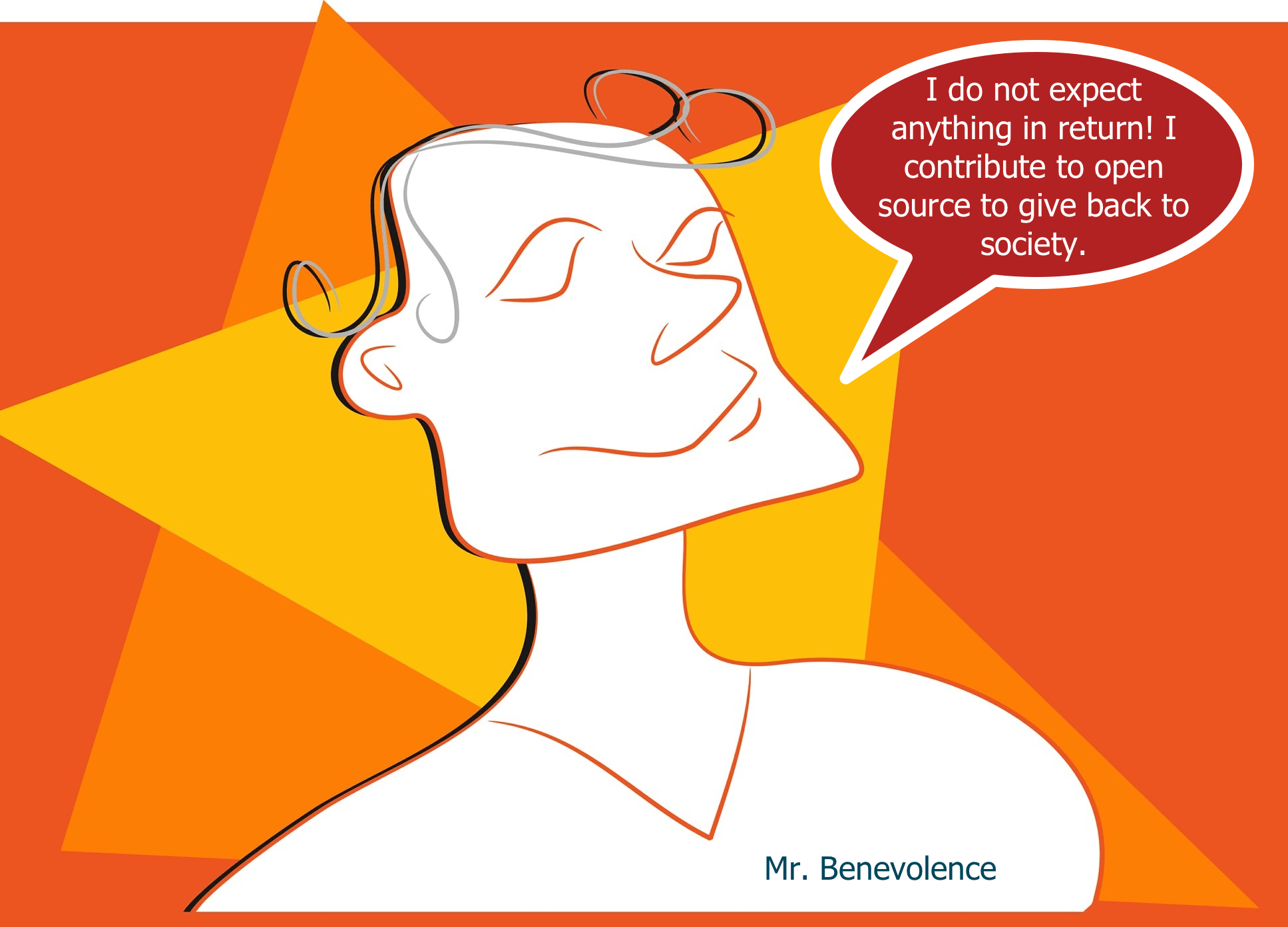
During a WordCamp in 2015, I remember someone being praised for contributions to the community.
The person who received the compliment made the appropriate right noises but added “I do not expect anything in return, it was simply a way to give to community.”
The man wore benevolence quite splendidly and that is where I felt he was wrong.

No, if you are making a career out of WordPress or any FOSS platform/product, building a company on it, you are doing this because a lot of people before you wrote the code and contributed.
And they did not do this because they were benevolent masters of the the technology world, but because they wanted to improve and nurture something they felt was important and useful to them. In the end, almost everyone who contributes to open source projects like WordPress, ultimately does so because they have skin in the game.
Better Software = Better Society
Okay, volunteering your time for better software is not exactly comparable to volunteering time for a better society. Writing code for a FOSS project gets you a lot of credit and improves the software you use to make a living. This cannot be compared to basically volunteering time at a homeless shelter or teaching under-privileged kids at a school. Anyone who compares the two is being conceited.
That said better software can greatly facilitate a better society.
A free open internet, will help democracy in the true sense and societies will greatly benefit from the feedback loops and organisational power technology gives the users. Millions today use the web to connect, to write opinions (including what you are reading now), to interact, to collaborate, to plan and to demand rights and change policies and hold each other and also the might governments accountable.
And such an internet should support freedom (ie: open source architecture, software and in general its philosophy), it should allow you to transfer your data from one place to another and definitely should not be a walled up garden.
This is why, people who make a living from open source software, should contribute to it in anyways they can, and not smugly say they do not expect anything in return. We have received plenty already, it is time we realise we are very privileged. It is time to stop calling contributing to something that benefits ourselves as charity.
Also check out: What is open-source culture? What does it mean to me?
-
filed under WordPress

Think about a large corporate company. Such a company is structured, systematic, primed to do things that experts around the world are hired to do to perfection. People come and go through revolving doors, experts are hired and fired or retired. CEOs are hired and fired. Many get jobs that are monotonous, mere cogs in a machine. The company is a machine, it is relentless and untiring. The financial resources it controls and sits atop of are enormous.
Now think about a village or a small town. It is exactly what a company is not. It is not really as super efficient, it is very informal in terms of how it grows or develops. Inhabitants often are poor or do not have the best education but usually have a lot of involvement in their society around them. They have skin in the game. It is a bit chaotic and when it comes to financial resources, it would never really be able to compare to a large powerful multinational company.
But tiny villages do outlast companies. Large powerful multinationals do meet their end, over decades or over a century. Villages grow like the weed, almost seemingly by chance and randomly into cities at times and survive for centuries and in some cases thousands of years. They survive earthquakes, droughts, floods, economic crisis and several other disasters. They survive because they are not machines, they do not break down completely, they adapt and survive.
Now think of several hundred such villages, towns and cities. What we have, is essentially a living civilisation!
Wait what does this have to do with open source?
Well, an open-source project is a lot like that village. It is like a living organism, it survives because it engages with people, it is not a machine that can break down.
It can grow pretty relentlessly but in unpredictable ways. For example, Unix and Linux as projects which many an expert thought would not be able to survive the might of Microsoft, today powers 67.0% of the web servers.
I have been involved over the past 3 years around community building around WordPress – an open-source project in Mumbai and lately in Pune. So I am more tuned into WordPress community and news around it.
Today, the WordPress CMS is used on 26% of websites that are out there. Not bad for a CMS ridiculed of being just good for blogging. Maybe it is because it was just that, a good blogging software, not pretentious and easy to start using than others, but that can be another post someday.
This happens because the community around WordPress or Unix (mainly Linux) is alive, is a living organism and it is so very deliberately – so that it can adapt, absorb and outlast all machines out there by centuries.
So open-source is a philosophy?
Yes. In many ways it is. In technical terms, the source code of the software is made open. So you can play around with it, customise it, rewrite it – no questions asked. But it means very little, without a sense of culture around it.
A culture to share expertise, make it accessible and easier to use for others. A culture that is not just about learning something and becoming an expert to get paid gigs – but a culture that nurtures understanding and expertise in others and you.
The software would not last too long without a culture of freedom and openness around it. This is why it is called FOSS – Free and Open Source Software.
WordPress culture?
Code contributions, free plugins and themes, free tutorials, free support over forums, free volunteering of time and effort to write content, translate content for the WordPress project, free time and effort to organise local meetups and WordCamps, all are many different ways we can contribute to the culture of WordPress.
It is what will keep WordPress more like a living organism and less like a machine!
Companion Links
- Cathedral and the Bazaar by Eric S Raymond – A great book that explains how this culture of community feedback and contribution works better against a more streamlined, structured style of development. The book will give you good insights into the history of FOSS movement.
- Revolution OS – A documentary that starts with the GNU movement and is great for understanding early days of Linux growth and its blossoming.
- The Story of WordPress – A book that is hosted on Git. Its free and open for anyone with internet to read up. It will take your through a through history of WordPress and its growth and breakthroughs.
PS: Thanks Saurabh for telling me about Cathedral and the Bazaar by Eric S Raymond during a conversation.
-
filed under WordPress
Almost seven years ago, I joined the merry band at rtCamp with 6 founders and couple of us more. For a few years now, other than the two remaining founders, I was the oldest employee at rtCamp.
Yes, you read it right! I “was” the oldest employee at rtCamp.
Three months ago, I put in my papers. Served the notice and today was my last day with rtCamp.
I am thankful for many things there. I learned a lot over the last few years about how a company evolves. I have experienced joyous times, disappointing times and most importantly lot of freedom. Freedom at rtCamp, allowed me to do a lot of things I did not think I would have ever looked up let alone get involved. A big example of that is the WordPress and open-source community in general.
That freedom allowed me to bring some of the things I learned and experienced back into rtCamp.
I moved to Pune, recently to work from rtCamp’s office which is based in Pune. Those were major life changes. I won’t be returning to Mumbai, I will be staying in Pune for atleast the next few months.
Wait am I crazy?
Some might think I am a bit crazy to quit my job without landing another one. But since rtCamp and the ideas around it were so dear to me, I had to be sure, I was not just quitting for an extra 10% raise (not that there is anything wrong in leaving a job for a raise) or something similar.
That would not have been the right treatment to my time with rtCamp. I feel good about leaving, I am leaving with a lot of good memories and good friendships.
I am looking forward to freelancing.
So what’s the future!
I have been very involved with the WordPress community that is local in Mumbai and Pune. I hope to give more time over the next few months to the WordPress open-source community in India and more. I am also looking forward to giving more to the global WordPress community.
Also a few months ago, I have become a contributor to JaiWP.com. I want to interview people, search for stories that involve WordPress from around India and possibly all over South Asia.
I will be writing a lot more on this blog. So keep in touch here.
I also want to spend a few days home in Mumbai, catch up with old friends there and simply chill out a bit!
Here are some photos over the past 7 years in rtCamp.
-
filed under TV and Movies
I recently came across a funny video. The speaker essentially imitates, mocks and totally destroys every TED Talk or similar talks, that I might have seen or will see in the future.
And thats good because there is a lot of absolute rubbish in the name of knowledge and information bandying about words like thought leader, influencer and post {add techonoloy jargon } world etc.
Anyways enjoy the video.
-
filed under Exploration
Last weeks popular headline was “Richest 85 people as wealthy as half of world’s population”.
What seems missing are followup headlines asking or demanding changes to the system. (more…)
-
filed under Ruminations

Cricket match in progress… Last week, I got myself a place in Pune. A new place that is small, decent and comfortable. I am now living in one of these well laid out, planned townships that were probably farmlands in 2005, the year I had previously moved from Mumbai to Pune.
Mumbai remains home. I have family there and probably will spend a good number of days every month there. But my new dwelling where I am staying much of the week, was at first comfortable and useful. Thanks to having a lot of colleagues around, my social life was suddenly pretty active and I am making good friends.
But the new place felt impersonal, new and odd. It did not feel warm as a house would (maybe the Pune winter has something to do with it), it did not feel like I belonged here.
I was a bit worried wondering if I was every going to feel at home here.
Then today, I managed to come along home a little earlier than my usual time. It was before the sun had set for the day. As I made some coffee for myself, I saw out of my 11th floor window this view.
Cricket match in progress… Some kids were playing cricket at a distance over a concrete pitch. I felt a bit at home, remembering a long gone yet familiar time of playing cricket with friends during school holidays.
This was good. I think I feel at home.
-
filed under Ruminations

I usually avoid hero worship. I generally dislike thinking of any one single person having realistically made a significant change to the world all by themselves. They never really do.
Today is 2nd October, the anniversary of Mahatma Gandhi. He was born a 146 years ago.
‘Father of the Nation’ is a epithet that I dislike at times to describe the great man that Mahatma Gandhi was. It enshrines the entire credit of modern India to a single person. I never really feel comfortable with such notions. That said, Gandhiji was a man who had an exceptional impact and his generation was truly a magnificent one in history.
These men and women in their thousands were flawed in more than one way. They were often in many respects, beliefs and ideas, products of their times.
They were also exceptional from many other generations as they forged and nurtured a union that we know of today as India, together with several hundreds of languages, different ethnicities, religions, caste and so much more which could have torn us apart.
India today is a chaotic democracy but a beautiful experiment at the same time. The experiment that we could refer to our “tryst with destiny” is still ongoing.
A friend, rightly point out on Facebook today . (Not linking to the post as it was private and he wants to stay anonymous)
but we should also remember that Nehru, Gandhi and all those leaders of that massive pervasive and diverse National Independence movement represented a generation. A generation that in early twentieth century was thinking of us in the 21st century, thinking of our future our well-being and our dignity. They were not just bothered with then and now, they had a vision — for a world where people like you and me can live with our heads high.
That dream came true for you and me but is not yet fully accomplished for millions of our fellow humans. That dream might not come true for our future generations and descendants. That pledge with destiny has not yet been fully redeemed. Lots of work left.
My friend is right.
In recent times, India feels more divided than ever. People are often casually hurling abuses and insults towards each other for having differing political opinions and views. We would do well to remember Gandhi’s generation for a few moments.
In this generation were founders of modern India. Our nation’s fathers and mothers. They thought about the world, about India and humanity. They forged a nation with no experience and several differences even among themselves by investing in institutions and civil traditions that continue to outlast them by many a decades. We should be grateful to them, but lots of work is still left to be done.
The responsibility is now ours. This age is now ours and we have to nurture this idea of India, make it better and leave it behind for generations to come.
As goes one of Gandhiji’s famous quotes “The future depends on what we do in the present”.
-
filed under WordPress
WordCamp Pune is done! I am having withdrawal symptoms. I would love to write a lot of things about WordCamp Pune but it would be fair to say, that since it took place last weekend, I am still high on #WCPune koolaid.
This is not a WordCamp critique. I am not writing about awesome sessions. I am not writing about what a WordCamp should be or not be about.
I am writing a good snapshot of my experiences at this WordCamp. So someday I can go back and read through the entire two-three days of magic that is called WordCamps.
WordCamp for me started a week before. I work remotely from Mumbai for rtCamp which is based in Pune. So I planned a full week in Pune that would end with WordCamp. Glad I did that!
A lot of the volunteers, organisers and even speakers were good friends of mine. I was a speaker at this WordCamp too. So as we came closer to the weekend, I was filled with excitement. An example of that is the tweet below.
Is it normal to stay awake out of excitement for WordCamp even if you are not the organiser?? 😀 #WCPune
— Aditya (@adityakane) September 4, 2015
Friday
I had been talking to Mahangu Weerasinghe from Automattic for a while on Twitter and at times exchanged emails about work culture, FOSS culture and culture of South Asia in general.
He was part of the Automattic team who flew down (should I say up since he flew northwards into India?) to Pune for the WordCamp. Mahangu along with Jeremy Herve and Aminul Sajib (Aminul is shy and quite, but writes really well at this blog) visited our office on Friday.
While they visited rtCamp, I think Jeremy might have been most amused with the local culture and customs. He was game enough to try out new food and ended up eating Pithla- Bhakari for lunch.

After somemore chat about work culture and ISPs in India, Automatticians left rtCamp (hopefully with fond memories) to co-work at their hotel.
Foundation Day (Saturday)
I left on time, well I could have left earlier but I thought maybe being a Saturday there would not be too much traffic. Was I right?
https://twitter.com/AdityaKane/status/640042793491038208
No I was not!
I reached ThoughtWorks office where the Foundation Day for WordCamp Pune was being conducted! These were mainly workshops for people new to WordPress but people not new to WordPress would also enjoy.
I must say the ThoughtWorks guys are really cool. I found their entire staff polite, thoughtful and friendly. This I encountered with everyone from their security guards to the folks who were co-ordinating with WordCamp organisers.
Here is tweet by Praveen (from Woo and now Automattic) at ThoughtWorks office.
https://twitter.com/spraveenitpro/status/640033241785696256
After a few sessions of WordPress fun in the morning, Mahangu asked where we could see some interesting places around. I recommended Aga Khan Palace. Actually, I recommended the palace for two reasons.
One. Mahatma Gandhi was under house arrest at Aga Khan Palace and his wife died while they were held at the palace. His secretary too died in Pune.
It would be easy for anyone to relate to Gandhi’s history as just about everyone in the world knows about Mahatma Gandhi.
Two. Because I too wanted to visit this place for a long time. I had gone there as a kid but did not really remember much.
Luckily, the place was nearby and Mahangu and Jeremy were hopefully happy to have visited Aga Khan Palace along with me. I added some historical context to some things for Mahangu and Jeremy.
One funny yet slightly embarrassing incident at Aga Khan Palace was that the tickets are priced differently for Indians and non-Indians. I knew this was an Indian tradition for sorts at tourist places. Mahangu hinted that it is often the same in Sri Lanka. I joked to them that they charge more to non-Indians as part a colonisation tax.
That said, it was very humbling to visit this place and walk the same hallways through which Mahatma Gandhi and many other luminaries of the freedom struggle did. Gandhi’s wife, Kasturba died at the Aga Khan Palace and it has her Samadhi. Samadhi is a sort of a memorial. It was simple, peaceful and sober just like it should have been.
The trip to Aga Khan palace was something I was happy to do. I am not sure how much it added to the experience of Pune for Mahangu and Jeremy, but I hope it did a little bit atleast.
Hidden Place found!
After the history tour of sorts, we made our way back to the Hotel where Mahangu and Jeremy were staying. Aminul and Rahul joined us at the Hotel and we made our way to a nearby pub. It was happy hours (I think!) and the five of us had Brun-Kheema and Beer! This pub is called the “Hidden Place”. Aminul has some interesting things to say about finding the Hidden place.
After some beer and some more – Rahul and I headed back to rtCamp office and did some work. Actually he worked, I caught up with some emails. Then in the evening we went shopping with Topher DeRossia.
He is of HeroPress fame. Topher was extremely humble about the fact that the HeroPress community had sent him all the way to Pune. I think he as bit shy and a little overwhelmed with his first trip to India. Actually later I found out that it was his first trip outside North America.
Topher was wonderful and very accessible to every single person who approached him and asked him about WordPress. He is deeply respectful of the community he represents and is perfect as the curator of HeroPress (he did tell me that he never edits or curates an essay!)
With @topher1kenobe at #WCPune – the man behind @heropress pic.twitter.com/0ukikhDIx2
— Aditya (@adityakane) September 6, 2015
I was invited for the speaker dinner as I was part of a panel discussion that was planned. I met far too many cool people at the dinner to list them down here one by one.
A lot of us were actually very tired by the end of it. I met Saurabh Shukla who was clearly tired and devoid of sleep. He mentioned he was very nervous and excited about the next day (actually something in Hindi which I cannot re-print here). I could relate very well to what he exactly meant. 🙂
WordCamp Day!
Sunday arrived and I quickly travelled around 8 am to Modern College which was the venue for WordCamp Pune. As rtCamp were sponsors, I got busy with some colleagues setting up our sponsor table.
The sponsor tables outside the auditorium were an awesome hit. Many walked upto these sponsors and started discussions, conversations which were a great deal of fun.
Visit us at our desk at #WCPune. There's a free licence of our Helpdesk plugin we are giving away pic.twitter.com/XVscdYto9j
— rtCamp (@rtCamp) September 6, 2015
It is always a great privilege to talk to people about your work, about open-source and WordPress by extension (something I will write more about towards the end of this post).
Mumbai Express
I met familiar faces from Mumbai. Alex who has been lead organiser of WordCamp Mumbai for two years, Sanat who is now the lead organiser for 2016, Vachan, Sahil, Raj, Thomson, Ajay and others. All of us should really have posed for a photo but I guess we did not take one. 🙁
Though at the selfie booth Alex and I got ourselves some new headgear.
New headgear at #wcpune with @gounder pic.twitter.com/TSvrAjxlc0
— Aditya (@adityakane) September 6, 2015
I won’t talk about WordCamp Pune’s multi-tracks. It can be confusing sometime and some good natured fun was had at the overlapping sessions.
Looks like #WCPune did a git pull pic.twitter.com/3PhpT5FLUE
— Sanat 🥷🏽 (@hSanat) September 6, 2015
Organisers
The organisers were fantastic. Some of them were my colleagues and ex-colleagues. Some I did not know as well before WordCamp. Organisers like Sheeba, Premanshu, Ganesh and countless other volunteers were simply awesome. The numbers overwhelmed them a bit but they kept slogging at it with a smile and always making everyone feel very welcomed.
Remember these are people whose jobs are NOT to organise events, they are doing this often for the first time in their lives and often it’s thankless work.
I am glad that some of us who volunteered in Mumbai saw some stress points and joined in moving stuff and microphones around at times without being asked or waiting to be asked.
This is how it should be at a WordCamps. When you see a hassled organiser (belive me all of them are ) ask them if you can help out with something, direct traffic in certain directions, or just help move stuff from one place to another.
So thanks again all of you guys who made WordCamp Pune possible.
One final thank you to the organisers for the months of hard work it took to make #wcpune happen! #straightouttapune pic.twitter.com/xhzSndrCcZ
— Mahangu Weerasinghe (@MahanguW) September 9, 2015
I spoke
I am incredibly shy as a person. I am very inward looking and don’t really like standing on a soapbox except when I am blogging I guess. But thanks to Saurabh Shukla, who suggested I moderate a panel discussion, I ended up speaking with a microphone in front of thousands of people. No, in reality there were just over over 150 but it felt like thousands :-D.
I overcame my fear of public speaking a big deal. That was enough of a personal takeaway for me. Thank you for this Saurabh!
Privilege!
I am privileged to work with a company like rtCamp and work in the WordPress ecosystem. I am not really the best geek around or the best mind around for that matter at these places. I have been lucky at times to be in the right place at the right time and with the right people. Much of it is just plain dumb luck.
So really talking about how products are built, services function, talking about career options to students and just out of college kids is really nothing short of a great privilege. Also every conversation has the potential to teach you something new if you really open yourself to it.
After party and back home!
I had a great time catching up with the organisers again at the after-party. There was drinking and merriment and posing for photos all over. Early on Monday morning, I travelled back to Mumbai with Sanat and Sahil.
Now I am having WordCamp withdrawal symptoms. This happens every time there is a WordCamp but I am happy in the knowledge that I will be part of another one soon in Mumbai.
More power to WordCamps!
-
filed under WordPress
In the mayhem of 2009 (the global meltdown etc), I ended up working as a blogger for a startup company. It’s name, rtCamp. For someone who was never paid to write, this was a really odd sounding job.
I got into rtCamp on the basis of a blog post I wrote on this blog. 🙂
Today, I complete six years at rtCamp. I never realised, I would work in a single place for that long. I don’t really plan that far ahead but it has been a good ride so far and I am enjoying new gigs, getting to learn new things even after six years.
What happened in the past six years!
A lot. I won’t talk about a glowing tribute to rtCamp. Actually since I am the Marketing – Head at the place, that is sort of my job, but I wont do it here.
- I learnt to appreciate the FOSS movement.
- I learned to appreciate anarchism as a political philosophy (listen to a leading philosopher on it).
- I moved towards becoming a more thoughtful writer (I think!) than being more rantful (is this even a word! So much for being thoughtful)
- I taught myself a lot of things.
- I now know how software projects are born, live and die.
- I learned that good people and good practices can co-exist with profitable business practices.
- I became less prone to put out my views on everything and more prone to listen first.
I would not credit rtCamp for almost all these life changing things over the last six years. The point is I laugh at some of the naivety of the six years ago me, but I still find space in this company.
But rtCamp allowed me freedom in many ways to go explore these topics and sometimes bring them back to the company. It also offered me colleagues and former colleagues who are wonderful thinkers, philosophers, artists and human beings.
So here’s to six more? Well I do not plan that far ahead but one never knows.